- 165 Posts
- 287 Comments
If we were surviving on bin contents, we’d smell too. If you want to know more about them: https://www.abc.net.au/listen/programs/offtrack/behind-the-ibis-invasion/6842242
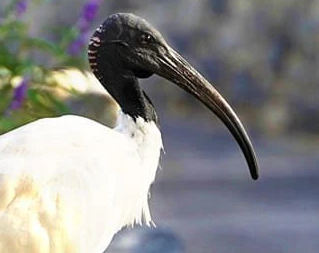
OK, tongue in cheek but I noticed that the bins in the video were either open or overflowing with bags that can be pierced, not secured under a lid.
I wonder if one day they’ll study the cast-iron digestive system of this species. We may learn something about survival. The way we’re going at the moment and its repercussions we may learn to throw out less food and also eat and and smoke less poison and not play ‘I’ve got a bigger nuke than yours’. In which case, survivors will be scavenging too and we’ll be smelling like bin chickens.

As seen from some of the comments here, people like to disparage Australian White Ibises when all they’re showing is how adaptable and clever they are. There are so many in human towns and cities because we have taken away a lot of their natural habitats. In regional areas they are sometimes called ‘the farmers’ friend’, due to their habit of flocking into areas afflicted by plagues of locusts and gorging on the insects.
They have really touching courting behaviour. The male secures a pairing territory on a branch of a tall tree to attract a female. The courtship ceremony involves the male putting on a noisy display, as well as showing aggression towards other males. When a female arrives, the male attracts her by bowing from his branch. He then offers the female a twig, forging a bond when she grasps it and they begin to preen one another. Once the pair bond is cemented, the birds fly off to build a nest at another location.


 4·1 day ago
Currently, we can only dream of having such cycling systems in place. Canberra comes closest to the Netherlands in having planned-for bike paths in many parts of the city from its early days. In most of our other cities it is difficult to impossible to do because of the road and street design and bike paths can only be developed in small sections of cities. I think you’d find the same problem in many European cities. You are very lucky to have such a practical, and community-minded (and flat) country which is so ideal for cycling.


 2·2 days ago
You’re so right. That’s why we have to do all we can to save them. 🦜 🦅 🦉 🐦⬛ 🦆
We have these beautiful little birds where I live. I don’t want to see them gone.
😱 That’s definitely not funny.
Be well and be kind to your self. It must be challenging having to deal with the condition and I wish for you excellent health.

I’ve been vegetarian for quite a few years and if you make sure you eat sensibly you can stay pretty healthy, help the environment and save money too.
So I guess you don’t eat red meat either because the smell of the uric acid (or whatever that awful smell is)? That is a lot stronger smell than fish. People just get used to different flesh meats and other pungent foods in general and end up normalising what they eat.
😉 Not the little fish. They just swim minding their own business.
Hope the changes I’ve made are more acceptable.
Say no to Tassie Salmon It’s time we Say No to Tasmanian-farmed Atlantic salmon for good.
This industry is linked to serious and ongoing environmental issues, including mass fish kills, animal welfare concerns and antibiotic use so heavy that local fishers have been warned to stay kilometers away from some sites.
Most critically, salmon farming in Macquarie Harbour poses an unacceptable extinction risk to the Maugean skate — a critically endangered species found nowhere else on Earth.
Atlantic salmon just aren’t suited to Australian conditions. Tasmania is the warmest place in the world where salmon are farmed at an industrial scale.
Tasmanian waters are warming rapidly, and summertimes are increasingly too hot for these cold-water fish. This weakens their immune systems and allows disease to spread rapidly through the crowded pens
Instead, look for NZ-farmed King salmon, Australian farmed barramundi and Murray cod, or even the native Australian salmon (which, sorry, isn’t actually a species of salmon).
Say no to wild caught barramundi Wild-caught barramundi from Queensland and the Northern Territory are caught using gillnets, which are known to entangle and kill a wide range of threatened marine animals.
This includes dolphins, dugongs, turtles and hammerhead sharks, as well as multiple species of critically endangered sawfish.
Instead, look for farmed barramundi and Murray cod. Most Australian barramundi is farmed in land-based tanks and ponds, and has a very low impact on the surrounding environment.
Note: There are significant concerns around a barramundi farm in Cone Bay, the only ocean based barramundi farm in Australia.
A proposed expansion of the farm is set to be situated in the highly biodiverse marine parks in WA’s special Kimberley waters.
Barramundi from Cone Bay is marketed as Tassal Fresh Aussie Barramundi and is found in Coles, we are investigating emerging and potentially serious environmental concerns with this product.
**So no to wild caught prawns ** When perusing prawn options, avoid those that were caught with a high risk to protected species.
Wild-caught prawns from New South Wales come with serious concerns about the capture of threatened and protected species.
These fisheries have a history of bycatch issues, meaning threatened species can be caught and killed alongside prawns.
There is some positive movement. The Queensland Government has been working with fishers on new bycatch reduction devices and has just announced plans to roll out electronic monitoring cameras on trawl boats from June, which should improve transparency and give a clearer picture of what’s being caught.
If monitoring is implemented properly, it will be a critical step towards these prawns becoming a recommended option in the future. For now, Queensland wild-caught prawns remain on our red list.
When shopping, use the GoodFish Guide to find any of the Green and Amber listed prawn options! Wild-caught King Prawns from South Australia’s Spencer Gulf are a great option from Australia’s only Green-Listed wild prawn fishery!
**Say no to imported squid ** That salt and pepper squid may be hiding a bigger story.
Most of Australia’s frozen and chilled imported squid can’t be reliably traced back to its source fishery.
Much is imported from China, whose distant-water fishing fleets are responsible for the majority of global squid catch.
These fleets have been reported to engage in illegal, unreported, and unregulated (IUU) fishing, as well as extensive human rights abuses.
Though populations of squid around the world are not deemed to be overfished, little is known about their ecological role making the lack of transparency in these supply chains concerning.
Choose Australian jig-caught Gould’s aka arrow squid or southern calamari from Victoria or South Australia.
Say no to snapper “Snapper” is used to describe a wide range of different fish, and after flake, it is one of the most commonly mislabelled seafood products in Australia.
That makes it especially important to ask your fishmonger exactly what species you’re buying and where it comes from.
Snapper populations (otherwise known as pink snapper) are unhealthy in New South Wales, and Queensland, and parts of Western Australia. In New Zealand , snapper trawling poses a high risk to marine mammals and seabirds but some important reforms are underway.
In Western Australia, snapper net fisheries are known to catch endangered Australian sea lions.
Instead, look for Victorian or South Australian snapper, which is a sustainable choice.
Say no to flake It’s time we all gave flake a break.
Flake should only refer to shark meat from gummy or rig sharks, but in reality, shark and ray products have some of the highest mislabelling rates in Australia.
A 2023 study found that 70% of shark products sampled were mislabelled, with 10% identified as endangered species. This makes it extremely difficult for consumers to know what they’re really buying.
Even when it is genuinely gummy shark, there are serious sustainability concerns. These include the continued catch and legal sale of endangered school sharks, as well as nets posing a high risk to endangered Australian sea lions in Western Australian fisheries.
Try barmed barramundi and Murray cod, sand whiting from New South Wales, or farmed silver perch — all sustainable choices for your Easter table.
Thank you for pointing that out.
Did you read the article in the link? The bit about the app (which is not shit) I put in there so people can know what to buy that is not damaging to marine environment . It’s to help people know what seafood is sustainably caught or grown, rather than buy what is not so as to not deplete the oceans of endangered species more than it already is. It also helps you know if farmed fish come from polluting businesses. It’s not an app you pay for. It’s an app you can use if you also care about what industrial fishing practices are doing to marine life. If you want to know more check the Australian Marine Conservation Society.

I don’t know what’s happening in Norwegian fish farms. You seem to know about them. Here in Australia we have to be aware of what’s happening with our seafood industry and how it’s impacting our environment and what we can do to not make the situation worse.
 3·3 days ago
I understand what you’re saying but societies have shown that IT IS POSSIBLE to improve the lot of people. The fact that we are going backwards in more and more places in recent times is unacceptable and we must not be fatalistic. There is always action we can take to not descend into dank self-interest. It is possible to improve society and we must be conscious of the forces that seek to divide us and mind control us. Change for the better is always possible.


💚