He he didnt but thats what he meant
I mean 99% of users use reverse proxy for https public access
Also read the threat replies …
That’s what this thread is about
…
No?

He he didnt but thats what he meant
I mean 99% of users use reverse proxy for https public access
Also read the threat replies …
That’s what this thread is about
…
No?
Yes that’s exactly what they do
The funnel exposes your local services to the public over https . Like what you want to accomplish with reverse proxy . Its just more straightforward for a beginner.
Personally I closed my router ports and switched to tailscalr funnels after using caddy with mutual TLS for years.
While using a web server before your self hosted micro services is the obvious answer and caddy the easier to configure, as a beginner you should also consider taiscale funnels. You dont need to mess with router stuff like port forward or caring if you ISP have your router behind a cgnat which is kinda norm nowadays , also dont have to care for a domain name dynamic DNS stuff . You could have a look to my quick how to . All you need is running a script , the ports and desired names of your subdomains and your tailscale auth key. https://ippocratis.github.io/tailscale/

Headscale does not support funnels unfortunately
Tailscale is not completely foss.

Same as above its a speech to text engine not a recorder but honestly thats all you need
“But, thinking about it now, I doubt it will actually affect the feature”
It will not
We don’t need to import a custom CA authority here just to insatll a client cert
Vaultwarden behind mutual tls and reverse proxy and https://github.com/oguzhane/bitwarden-mobile until https://github.com/bitwarden/mobile/pull/2629 is merged
But honestly all services you mentioned are worthy.
Anything that fits your needs imao
I use https://github.com/dgraziotin/docker-nginx-webdav-nononsense
There are many dockerised fileservers
OMV is quite limiting and maybe a little heavy for the pi(?)
Docker is straightforward Idk what to say You install docker and docker compose on host and run some compose.yml’s to spin up your services
RPI4/400 is perfectly capable as a little home server. All it needs is a good SD card.
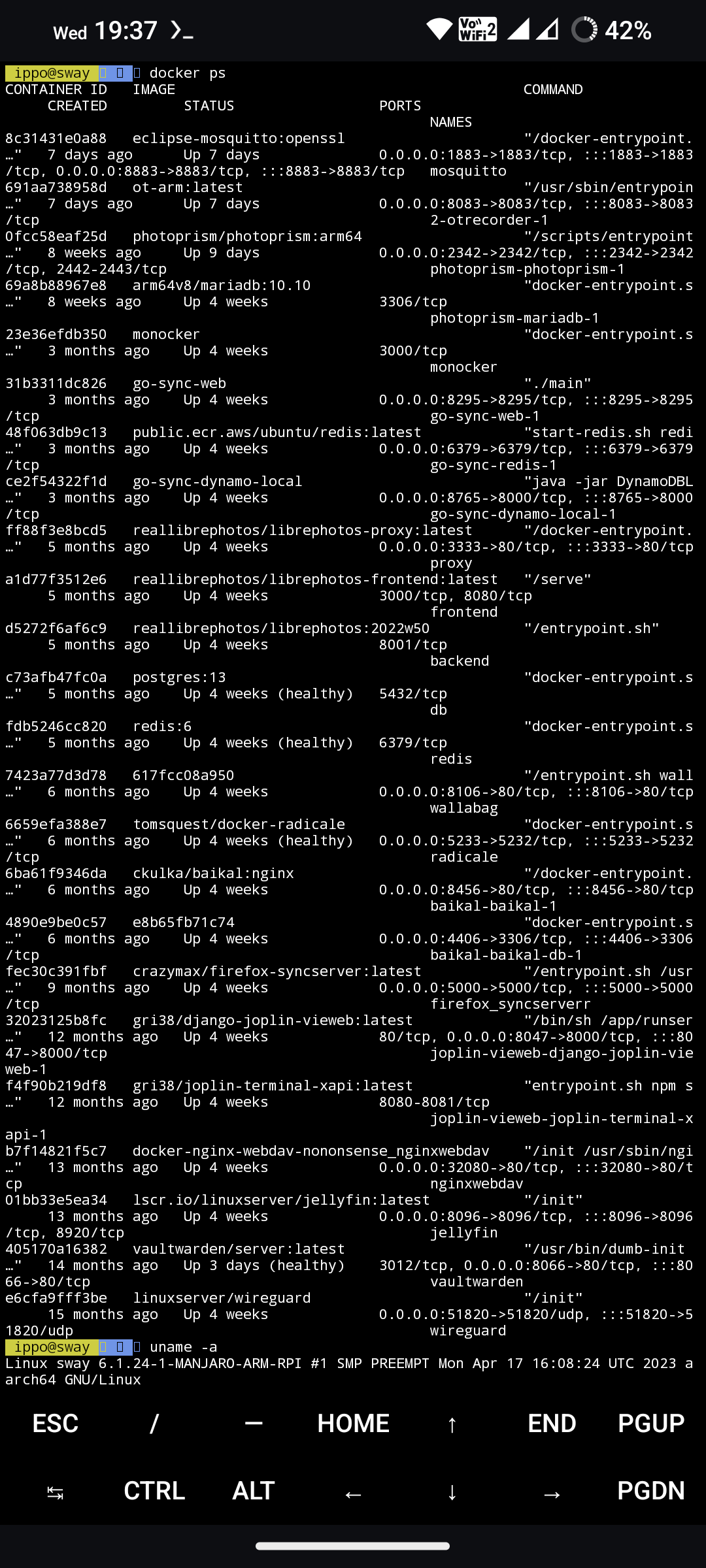
Owntracks,photoprism,monocker,brave go m-sync,libre photos,wallabag,radicals e,Baikal,Firefox sync,Joplin web,webdav server,jellyfin,vaultwarden,wireguard
Davx⁵ has Mac OS caldav carddav server integration so you can sync with it.
https://www.davx5.com/tested-with/calendar-and-contacts-server
On android you can use simple calendar or etar to view calendars and “tasks” or jtxboard for tasks/journals
Icard is actuality the only alternative that can register as a contactless nfc payment that not relying on google/Apple wallet and its perfectly safe. It’s an actual bank in Bulgaria and is eu regulated and PCI certified
Not Foss. Kinda of a privacy nightmare as you need to verify your identity and location with actual documents but as already said its not google and is a solid option if you are degoogled.
Your options in aftermarket OS fall in to 3 categories imao
those that support relocking the bootloader (grapheme,calyx,divest, other smaller projects maybe)
vanilla roms with signature spoofing permission so that you can have microg on them. Some even come with microg preinstalled (/e/,lode,Los4mg) And some are gmscomat compatible (voltage,awaken,spark). There are plenty but they don’t care about signed images and relocking.
some unofficial build from any of the above from a maintainer that cares to sign his own images so that you can relock your BL as your device supports it.
Channels and groups are not encrypted in tg. Like this community we now chatting is not encrypted. I dont see anything wrong in that. For the tg encryption security audit , i think its beyond the purpuse of the channel i made so idc.
I dont even know what am i suppost to see here. Global search?





Ok I’m not any networking expert but I think you are overestimating the risk here.
Opening a port doesn’t mean you are opening your whole home network just the specific services you want. And those not directly but with a web server in front of them . Web servers talked in this tgread that sit in front of open ports are well audited . I think that measures like mtls a generic web server hardening are more than ok to not ever be compromised.
But yeah I’m surely interested to listen if you could elaborate.
Thanks