
49·
3 years agoThe Onion has always had good takes on israel.
https://www.theonion.com/the-onion-calls-on-israel-to-bomb-our-offices-in-case-1846912378

☭
The Onion has always had good takes on israel.
https://www.theonion.com/the-onion-calls-on-israel-to-bomb-our-offices-in-case-1846912378
I’ve never seen her engage with these critiques in good faith. She seems to mostly just get really defensive and refuses to rethink her strategy or the theory in general. A big point here, I think, is the fact that her business model where her readers pay her, reinforces that kind of non-Marxist analysis of propaganda, because it lets the readers feel as an educated and truth-knowing elite above the majority of the masses that are ‘brainwashed’.
I want to try to fight those as best I can before worrying about being a perfect Marxist.
The problem with this is that it’s very hard to actually fight propaganda without a Marxist understanding of how it works. Just telling people the truth doesn’t really do a lot in most cases. To be effective at counter-propaganda, we have to understand how it actually works in the first place, and theories like ‘brainwashing’ don’t enable us to do that. To effectively fight propaganda, we have to first understand its material origins, relations to different classes, and modes of operation (licensing and bullying rather than brainwashing). These parts are missing from Johnstone’s analysis and that makes her counter-propaganda less effective. This article goes into it in more details, and Red Sails has a whole bunch of articles on the topic.
I just recently finished Caliban and the Witch and found it very good! It’s an amazing account of the emergence of capitalism with a lot of further recommended reading in the notes. It really breaks down what primitive accumulation and the enclosures entailed, and it made me aware of pre-socialist liberation movements, both during feudalism and capitalism, and both in Europe and in its colonies. Throughout all this it also describes the social position of women and the construction of the modern patriarchy. I definitely highly recommend it.
Just started reading Assata. I’m only on chapter 2, but it’s a really good read so far.

This is the point Marx makes when he’s making the distinction between labour and labour-power.
The worker sells his labour-power - his ability to work for a certain period of time - to the capitalist for a wage. That wage is determined by the value of the necessities needed to reproduce the labour-power of the worker (food, rent, etc.) - and it can also fulctuate due to supply and demand.
Labour-power is a special commodity because it creates additional value while it’s used up (while a person is working). The additional (surplus) value created is greater than the value necessary for the reproduction of the used up labour-power, and the capitalist owns the produced surplus value.
Engels explains this distinction, and the reasons why it’s necessary in the introduction to Marx’s Wage Labour and Capital.
Of course. As Lenin said, Communism is Soviet power and the electrification of the communal toothbrush.

She also recently tweeted about a Soviet documentary on Islam.
Deinocheirus - even though it’s a herbivore, I’m still pretty fucked.
Reminds me of Philomena Cunk
Popper is often celebrated by libs, but he is just a racist western chauvinist (like most of the libs themselves).
Here’s a quote from Domenico Losurdo’s book, War and Revolution:
An explicit rehabilitation of colonialism is ventured by the theoretician of the ‘open society’ himself. Popper seems to offer an unequivocally positive assessment of the centuries-long domination of the rest of humanity by the great European and Western powers: ‘We freed these states too quickly and too simplistically.’
Yes, to reach people we need to be where the people are, and nowadays a lot of people are online. Of course, this shouldn’t and can’t replace real life organizing, but it should supplement it.
From Roderic Day’s ‘The Virtual Factory’:
this doesn’t mean that the amount of time we spend online should be treated as something shameful, silly, or superficial. It absolutely deserves to be handled with greater seriousness and discipline.
(…)
There is no way to retreat into a pre-internet era. Instead of self-flagellating and guilt-tripping, pretending we can escape our wired future by unplugging, we need to take our participation in the medium seriously and in a way that integrates well with our offline organization.
Actually, the authors of this are professors from that university, lmao.
They were even given some grants and awards.
Arxiv and similar services are mostly used in actual academic circles to publish pre-prints or just to get articles out there while they’re still being reviewed by actual journals, so it’s possible that this will be published in a journal at some point.
I agree that the question is problematic, but he doesn’t challenge it. He answers as if the assumption of an abstract multipolarity is valid. I think he should’ve answered concretely, in accordance with today’s material reality.
Again, I don’t care about Shea, I’m not defending him, and I don’t care what he’s saying. I’m commenting on the interview in question.
I don’t take anything Shea says at face value. I’ve listened to the part of the interview in question and find Becker’s answers to be weird and contradictory. As I’ve explained in another comment, he answers the question “is it good that unipolarity has been challenged?” and his answer is in essence no because it seems like he just argues against some multipolarity in general without considering the material reality of today’s world split into the west and the rest (with China on top). His answer implies that today’s multipolarity is like that of pre-WW1 which is in contradiction with his stance in general.
He asks the question "How can we make radical change in America by saying ‘Vladimir Putin is our leader?’, which is a very salient point. He goes on to say that we should strive for socialist leadership in all of our countries. What is so off about that? Seriously?
Nothing is wrong with that in general, but who is he saying it to? Who are these people that only want multipolarity and simp for Putin? His call for socialism is good, but ignores the material reality of today’s world in which new socialist construction is not possible without first the decline of US hegemony.
I don’t like Shea and think he’s quite problematic, but your comment about what Kim is saying is, I think, not a good portrayal.
but just thinking about it for like 20 seconds, this obviously wouldn’t mean supporting reactionary states against the US for the pure sake of it. Would Kim il Sung have supported Hitler? Obviously not.
The USSR and China did ally with other capitalist and imperialist forces against Japan and Germany in WW2. And today’s world is largely split into two camps - the US and China. Critical support given to Russia (which while being reactionary still currently plays a progressive role globally in the struggle against US hegemony and is allied to the world’s socialist countries, though only out of necessity) is not the same as “supporting Hitler”. Putin and Russia today are not equivalent to Hitler and Nazi Germany.
As Losurdo puts it:
we can speak of a struggle against a new colonial counter-revolution. We can speak of a struggle between the imperialist and colonialist powers — principally the United States — on the one side, and on the other we have China and the third world. Russia is an integral part of this greater third world, because it was in danger of becoming a colony of the West.
I mean, he is still kind of saying that, no? He answers the question “is it good that unipolarity has been challenged?” and his answer is in essence no because it just seems like he argues against some multipolarity in general without considering the material reality of today’s world split into the west and the rest (with China on top). His answer implies that today’s multipolarity is like that of pre-WW1 which is in contradiction with his stance in general.
Multipolarity is coming simply as a part of the historical process of our development - just like feudalism emerged, then capitalism, then imperialism, etc. Empires also come and go and in their wake other countries rise - we have seen this numerous times throughout history. Yet it seems like these socialist anti-multipolarity people think we can stop these processes just by the actions of a few individuals or small groups. Not to mention the straw man argument presented where we apparently just want multipolar capitalism as an end goal and nothing else. Yes, all of us would prefer if every state just turned socialist right away, but that is not physically possible. We have to work with what we are given, and currently that’s multipolarity.
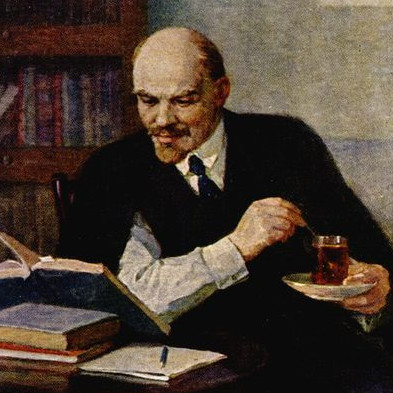



I would say that What Is To Be Done? is one of Lenin’s most important works, if anything I’d say it’s underrated. Like (mostly) all of his works, it talks directly about the situation in Russia at the time, but that doesn’t make it any less useful. You just have to extract the universal principles from the tactical particularity he’s writing about.
WITBD? focuses on the need for organizing, and not just any kind, but actual revolutionary organizing with both theory and practice, for bringing together the proletariat with all other revolutionary classes and even individual intellectuals. It speaks against just focusing on a binary interpretation of class struggle (proletariat vs bourgeoisie), and instead it tells us to focus on any struggle that is revolutionary (anti-colonial struggles, gender liberation struggles, etc.).
Here’s how Losurdo describes it in Class Struggle: